

How to Swaddle a Baby Safely: Steps and Safe Sleep Tips
Most babies are easily overwhelmed by the bright, chaotic world outside their mother's womb, but swaddling a baby can be just what is needed to keep your little one feeling safe and secure!
Newborns love to snuggle - after all, they're in what's commonly referred to as "the fourth trimester," the period of time when a newborn baby adjusts to the outside world. Most babies are easily overwhelmed by the bright, chaotic world outside their mother's womb, but swaddling a baby can be just what is needed to keep your little one feeling safe and secure!
How to swaddle a baby safely: the short version
Done correctly, swaddling can help calm a newborn and promote sleep. It doesn't lower the risk of SIDS, though, so these safe sleep rules apply every time:
- Always lay a swaddled baby on their back, for naps and at night, on a firm, flat surface with only a fitted sheet.
- Wrap snugly around the chest and loosely around the hips. You should be able to slide two or three fingers between your baby's chest and the swaddle, and their legs should be able to bend up and out at the hips.
- Keep the fabric away from your baby's face, and keep their head uncovered.
- Stop swaddling as soon as your baby shows any signs of trying to roll over. Some babies start working on rolling as early as 2 months.
- Never use a weighted swaddle, weighted sleep sack or weighted blanket.
- Watch for overheating. Use a thin blanket, skip hats indoors, and check for sweating, a hot chest or flushed skin.
Why do babies enjoy being swaddled?
Swaddling can keep the startle reflex from waking your baby.
Newborns often make jerky movements, called the Moro reflex or startle reflex, and usually occurs when a baby is exposed to sudden movements or loud noises. This reflex can hinder a baby's sleep. Careful swaddling may help prohibit your baby's startle reflex from jolting her awake at night.
Thankfully, the Moro reflex usually disappears after your baby is a few months old and begins to sleep more soundly at night.
Swaddling keeps a newborn warm and snug.
Loose blankets don't belong in your baby's crib. A thin blanket wrapped snugly and correctly as a swaddle is different. A soft swaddle blanket can be the key to a good night's sleep for your little one! Swaddling a baby keeps him comfortable and warm as it keeps his arms and legs close to his body.
Newborns have a difficult time regulating their body temperature, and swaddling your baby can be useful for helping her stay warm without using blankets.
Swaddling creates a womblike feeling.
The early weeks are often referred to as "the fourth trimester" because infants often struggle with the separation from the mother's body. Newborns value closeness to caregivers in order to form secure attachments. Swaddling a baby can help your baby feel a similar sense of security to being curled up in the mother's womb.
When an infant feels a similar sense of warmth and security as they experienced in the womb, this creates an overwhelming sense of peace and calm. Swaddling can help with a newborn's sleeping patterns.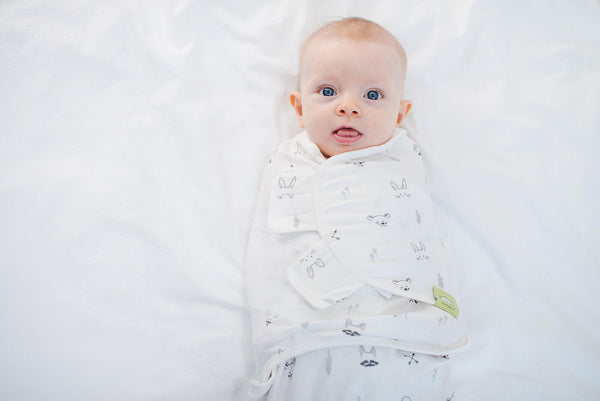
How do I swaddle a baby?
Swaddling gets easy after a little practice. Use only a thin, breathable blanket, such as cotton muslin, that's big enough to wrap around your baby. Aim for snug around the arms and chest and loose around the hips and legs.
Here's how to swaddle a baby with a blanket:
- Spread the blanket out flat and fold one corner down.
- Lay your baby face-up on the blanket, with their head above the folded corner.
- Straighten your baby's left arm by their side. Wrap the left corner of the blanket over their body and tuck it between their right arm and the right side of their body.
- Tuck the right arm down by their side, then fold the right corner of the blanket over their body and tuck it under their left side.
- Fold or twist the bottom of the blanket loosely and tuck it under one side, so your baby's legs can bend up and out at the hips.

Now check your work. You should be able to fit two or three fingers between your baby's chest and the blanket, and the fabric should stay well away from their face. Don't wrap the legs straight down and pressed together, because tightly wrapping straightened legs is linked to hip dysplasia.
If your baby seems uncomfortable or can't settle, unwrap them and try again. If you'd rather skip the folding, a wrap-style swaddle with a leg pouch, like the KeaBabies Soothe Swaddle Wraps, does the same job. Follow the instructions that came with it.
Swaddling can help soothe a baby to sleep. When a baby is wrapped in a soft blanket, he is more likely to remain calm and peaceful during sleep. If the swaddle is too tight or too loose, your little one might be uncomfortable. If your baby has a hard time settling after you've swaddled him, unwrap him and try again. Swaddling takes practice and patience!
Swaddling your baby should follow safety guidelines for newborns.
Parents can learn how to swaddle by watching tutorial videos online or attending newborn care classes.
To reduce the risk of Sudden Infant Death Syndrome (SIDS), the AAP recommends placing babies on their backs to sleep. When babies are swaddled and placed on their stomach, or they roll to their stomach, the risk of suffocation increases. Swaddling should only be done when a baby is placed on his back to sleep.
Parents should stop swaddling when their baby shows signs of rolling.
As soon as your baby shows signs of wanting to roll over, it's time to stop swaddling. Swaddling is potentially dangerous for a baby that learns to roll over in their sleep. Only swaddle your baby if he is younger than a few months old and shows no interest in rolling over.
A safe alternative to swaddling your baby is using a sleep sack or wearable blanket. These allow your baby's arms to remain free and give his hips and legs more freedom of movement. Sleep sacks come in a variety of designs and thickness, so choose one that meets your baby's preferences and needs.
Some sleep sacks compress the baby's arms and chest and should not be used once a baby starts showing interest in rolling. However, wearable blankets and sleep sacks that allow the baby to move freely can be used well into infancy and toddlerhood and provide a much safer alternative to loose blankets.
Swaddling may present some risks.
Swaddling decreases the baby's startle reflex, but it also decreases their level of arousal at night, making it more difficult for the baby to wake up. Swaddling is preferable to parents because it allows them to get more sleep, but decreased arousal can become problematic when it leads to SIDS. Parents should be aware that it is developmentally normal for newborns to wake frequently throughout the night. A newborn's health and growth is dependent on frequent feedings and responsive caregivers.
The American Academy of Pediatrics gives several tips for safe sleep. First, parents should always place their baby on his back to sleep. Caregivers should watch for signs that their baby is trying to roll over, which is dangerous if the baby is being swaddled to sleep. Keep all loose blankets, stuffed animals, pillows, and toys out of the baby's crib. Even a swaddle that is too loose can become a risk if it covers your baby's face and affects proper breathing.
Some products are marketed to help babies sleep but don't fit safe sleep guidance. Skip crib bumpers, sleep positioners and wedges, inclined sleepers, and any sleep surface tilted more than 10 degrees. Skip weighted swaddles, sleep sacks and blankets too, since they can put too much pressure on a baby's chest and lungs. Your baby is safest on their back in a crib, bassinet or play yard with a firm, flat mattress and a fitted sheet, and nothing else.
Swaddling can also become a risk if it causes your baby to overheat. Newborns can't regulate their body temperature, so swaddling can increase the chances that your baby's body temperature will rise too much. Check for signs of overheating such as sweating, a hot chest or flushed skin, and don't put a hat on your baby indoors. You can dress your baby in lightweight clothes and choose a swaddle blanket that is made of thinner material.
Your baby's hips can also be affected by swaddling.

Babies that are swaddled too tightly can develop hip dysplasia, a condition where the hip joint has an abnormal formation. The American Academy of Pediatrics advises parents to keep their baby's hips loose, without straightening and tightly wrapping the baby's legs. The legs should be able to bend upward, even when swaddled.
The KeaBabies SOOTHE Swaddle Wraps are the ideal design for newborn babies.
The KeaBabies SOOTHE Swaddle Wraps come in packs of three and are perfect for little ones! They are ergonomically designed to help comfortably position your baby's hips and legs. They are made from soft, breathable organic cotton that is luxuriously gentle on your newborn's sensitive skin.
These swaddle wraps are durable, soft, and come in a variety of colors and patterns. If your baby uses a pacifier, don't attach it to the swaddle while they sleep. The AAP advises against attaching a pacifier to a sleeping baby's clothing. The velcro swaddles are easy to use and require just four simple steps to securely swaddle your baby.
The KeaBabies SOOTHE Swaddle Wraps are machine washable. Be sure to wash the swaddle wraps in cold water, and tumble dry on low. They are durable enough to last through many washes without losing their shape or stretch!

The KeaBabies SOOTHE Swaddle Wraps are available here. These swaddle wraps come in adorable packaging, making them a great baby shower gift!
Swaddling a baby doesn't have to be a complicated endeavor. With the KeaBabies SOOTHE Swaddle Wraps, you can swaddle your baby to sleep with ease. Used with the safety steps above, a good swaddle can help your newborn settle at sleep time.
|
|
Meet Our KeaMommy Contributor: Kaitlyn Torrez I’m Kaitlyn Torrez, from the San Francisco Bay Area. I live with my husband and two children, Roman and Logan. I’m a former preschool teacher, currently enjoying being a stay at home mom. I love all things writing, coffee, and chocolate. In my free time, I enjoy reading, blogging, and working out. |

Most Popular

Join the KeaCommunity
For latest updates on new products, promotions, giveaways, and more.


