

Thanksgiving Food for Toddlers and Babies: What to Serve
If this year is your baby or toddler's first Thanksgiving holiday when they are old enough to enjoy some festive foods, check out this guide to learn how to prepare and serve holiday foods in a safe, healthy way for your little one.
Thanksgiving is a wonderful time when families gather together to enjoy time with one another and reflect on everything they have to be grateful for. The highlight of most family Thanksgiving celebrations is the food. Whether you're hosting a small gathering or a large dinner, Thanksgiving foods are the main way to commemorate this special day.

If your little one is ready to start solids (6 months or older), or has been eating baby food or solid food for some time, Thanksgiving dinner can be an exciting event where they can try a variety of new flavors and textures. From mashed potatoes, to roasted turkey, to green beans, to stuffing, to pumpkin pie, there is sure to be several new foods for your little one to try during this Thanksgiving holiday.
Thanksgiving food for babies and toddlers at a glance
Most of the Thanksgiving table can work for little ones if you set their portion aside before the salt, sugar and toppings go on. Plain turkey, mashed potatoes, sweet potatoes, squash, carrots, green beans and soft-cooked apples are all good places to start.
- Babies just starting solids (around 6 months): Offer smooth purees or mashes of plain turkey, sweet potato, squash, carrots, green beans or cooked apple. Cook their portion with no added salt or seasoning.
- Babies eating finger foods: Offer soft, easy-to-swallow pieces, such as well-cooked carrot, tender shredded turkey or roasted squash, cut small.
- Toddlers: Most of the family meal works, cut into pieces no larger than half an inch. Keep sweet dishes to a small taste, since added sugars aren't recommended for young children.
At any age, keep your child seated while they eat and stay with them for the whole meal.
Be aware of when your baby is ready for solid food.

A baby's diet should primarily consist of breast milk or formula for the first year of life, and babies should not start solids without the approval of a pediatrician.
Some signs that your little one might be ready for solids include:
-
Your baby is around 6 months old.
-
Your baby stops the tongue thrust reflex.
-
Your baby can sit up unassisted or with minimal support.
-
Your baby leans forward toward a spoon.
-
Your baby seems interested in food.
If your baby is just beginning to eat baby food, you might opt to puree some plain foods for them.
Don't serve complex finger foods to a beginning eater. Instead, put aside some fruits or vegetables that you're already using for other parts of the meal, and steam and puree them so they're nice and soft for your baby.
Some tasty, healthy Thanksgiving foods to puree include sweet potatoes, green beans, squash, apples, carrots, or turkey. Simply steam these foods until soft, blend with some water, and serve to your little one. Although your baby might be excited to eat a variety of new flavors, many parents opt to introduce one new food at a time to monitor the baby for any reactions.
Mashed potatoes or baked sweet potatoes are great first Thanksgiving foods because they are already soft and are easy to spoon-feed to an infant. Just be sure your baby's portion has no added sugar, salt or honey (honey is unsafe for children under 1).
How to serve Thanksgiving foods to babies and toddlers:
1. Turkey.

Turkey is the central part of any Thanksgiving dinner! If your baby is new to solids, consider pureeing some turkey with broth or water until it resembles a mash that has a smooth consistency.
For more experienced eaters, simply remove the turkey skin and offer small strips to your child. If your little one is just starting solids, help them pick up pieces of turkey and guide it to their mouth, or pre-load a fork or spoon.
2. Sweet potato.
A sweet potato mash is full of nutrients and delicious taste for babies and toddlers. Just be sure to avoid traditional sweet potato casseroles, as these usually contain lots of sugar, and marshmallows and nuts are a choking hazard for young children.
3. Mashed potatoes.

Mashed potatoes are an excellent part of the meal and can be a super easy first food for your baby to try. For beginning eaters, parents can add water, milk, or broth to water down the potatoes and thin them out. More experienced eaters can have fun sitting at the table and feeding themselves mashed potatoes all by themselves! You can try serving potatoes with a little butter or cheese, if your child tolerates dairy. Just be sure to avoid extra salt.
4. Squash.
Squash is easy to find this time of year. Whether you choose pumpkin, butternut squash, spaghetti squash, or acorn squash, this is a simple dish to prepare for babies and toddlers. You can puree squash with some water or broth, or roast, bake, or sauté and serve in baby-safe pieces or on a pre-loaded spoon. The internet is full of great recipes on how to incorporate fall squash into your baby's meal.
5. Carrots.
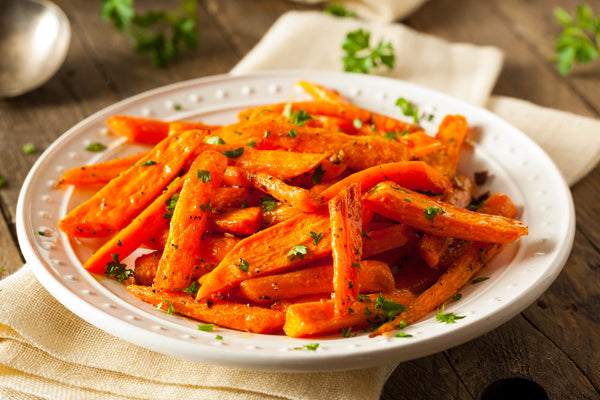
Carrots are also a typical Thanksgiving side dish, and this vegetable has amazing health benefits for your child! However, traditional recipes like glazed carrots often contain large amounts of sugar, or honey, which is unsafe for babies under age 1.
If you plan on cooking common dishes, simply set some aside for your baby and mix with water, blending until smooth. A more experienced eater might enjoy picking up slices of roasted carrot, as long as it is mushy enough to not choke on.
6. Stuffing.
Stuffing is one of those dishes that you might want to avoid, as some recipes contain lots of salt. If you do choose to feed your baby stuffing, mash or blend it until smooth. Toddlers can enjoy small, soft pieces, as long as it isn't too gummy, chewy, or contains raw vegetables.
7. Green beans.
Green beans can be a delicious food for babies to enjoy during the holiday meal. To puree green beans, just blend with water, chicken broth, vegetable broth, or gravy (without salt) to form a smooth consistency.
Older babies and toddlers might enjoy the taste and texture of green bean casserole. As long as the green beans are cooked so they are soft, green bean casserole is fine for toddlers. You can also steam or roast plain green beans, removing any stems or hard pieces before serving them as finger food.
8. Cranberries.
Added sugar in dishes is not healthy for babies and toddlers, and most cranberry sauce recipes contain lots of sugar to cut the bitterness of the berries. However, on special occasions, older babies and toddlers can enjoy a taste or two of special foods like cranberry sauce or relish.
Parents can opt to treat cranberry relish as a topping, putting it on bread, oatmeal, or bites of turkey. Whole cranberries are a choking hazard and should not be served to young children.
9. Bread.
Babies and toddlers can enjoy munching on bread, as long as it does not become a choking hazard. Lightly toasted bread or dinner rolls can be a delicious snack for kids, and parents can choose to add toppings like butter, cinnamon, or mashed sweet potatoes.
10. Desserts.
Extravagant desserts are typically part of the Thanksgiving feast. However, due to the high sugar content, it's best to avoid sweets for babies and toddlers. If your toddler has a taste, keep it to a bite or two, and check that it has no nuts, whole cranberries or, for babies under 1, honey. Cranberry relish, pumpkin pie, apple pie, and cakes may contain too much sugar, sticky pieces that can be difficult to chew, or honey, which is not suitable for children under age 1.
For a "dessert" your child can enjoy, roast an apple with a little cinnamon until it's soft. Puree it into applesauce for a new eater, or serve soft, cooked slices to an older baby or toddler. Skip raw apple pieces, which are hard and a choking risk for young children.
Thanksgiving foods to skip or change for babies and toddlers
A few classic holiday foods need a swap or some extra prep before they go on a baby's or toddler's plate.
- Honey: Don't give honey, or foods made with it, to a baby younger than 1. Honey can carry the bacteria that cause infant botulism. Check glazed carrots, glazed ham, rolls and desserts.
- Nuts: Keep whole and chopped nuts, including pecan pie and nut-topped casseroles, off your child's plate. The AAP advises keeping high-risk choking foods like nuts away from children until at least age 4.
- Marshmallows: Scrape the marshmallow topping off the sweet potato casserole before serving a scoop.
- Whole cranberries, grapes and corn kernels: Mash, puree or finely chop them. Whole berries, grapes and corn kernels are all choking hazards for young children.
- Raw vegetables and hard fruit: Cook carrots and apples until soft, and keep the veggie tray for the grown-ups.
- Sausage, meat and cheese: Shred or chop meat and cheese into very small pieces, and pick the sausage out of the stuffing for younger eaters.
- Snack bowls: Keep chips, pretzels and popcorn out of reach while you wait for dinner.
- Salt and sugar: Serve your child's portion before you add salt, gravy, glazes or sweet toppings.
Food safety matters too. Cook the turkey to 165°F, checking with a food thermometer, refrigerate leftovers within 2 hours and use them within 3 to 4 days.
Make your little one's first Thanksgiving meal fun and safe.
Trying new foods can be fun for parents and kids alike, but be aware of how you prepare the food. Common holiday ingredients like nuts, marshmallows, syrups, and raw vegetables can be a choking hazard for young children. Cream, yogurt, and milk contain dairy and should be avoided for children that are sensitive or intolerant. Always supervise your child while they eat. Enjoy this wonderful family holiday together.
|
|
Meet Our KeaMommy Contributor: Kaitlyn Torrez I’m Kaitlyn Torrez, from the San Francisco Bay Area. I live with my husband and two children, Roman and Logan. I’m a former preschool teacher, currently enjoying being a stay at home mom. I love all things writing, coffee, and chocolate. In my free time, I enjoy reading, blogging, and working out. |

Most Popular

Join the KeaCommunity
For latest updates on new products, promotions, giveaways, and more.


